maxim88news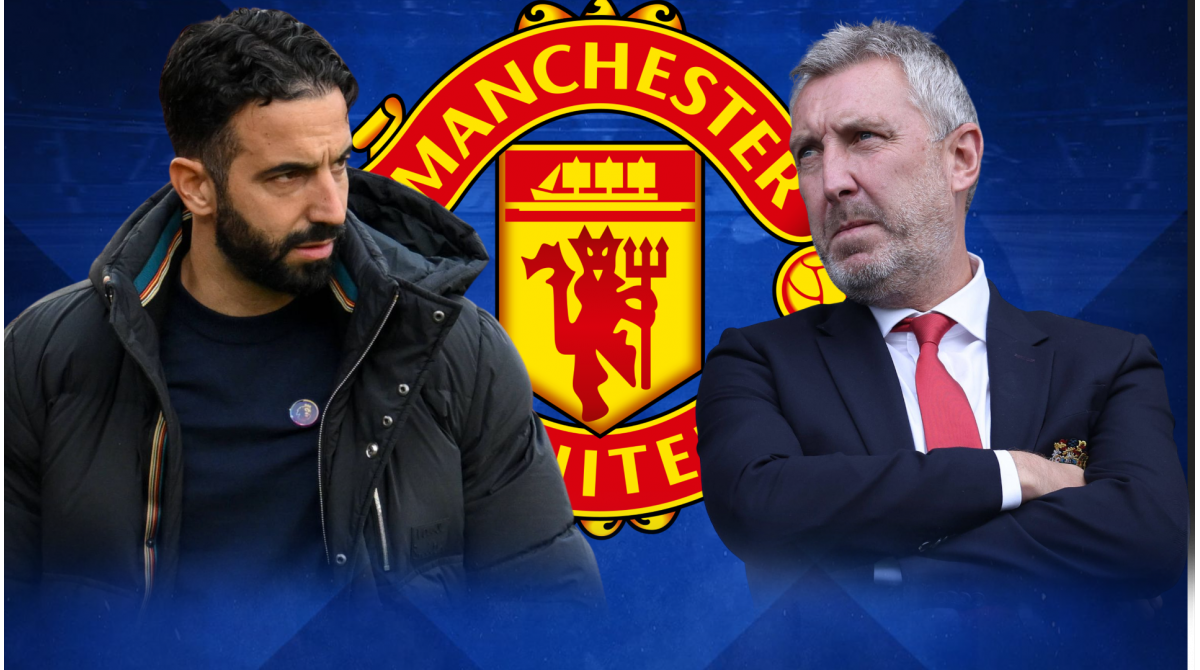
Opinion

©TM/IMAGO
Rúben Amorim’s often harrowing tenure as Manchester United head coach has ended after a pointed denunciation of the Old Trafford hierarchy. The relationship between Amorim and influential figures in United’s footballing structure became increasingly strained in recent weeks. And the 40-year-old’s tirade in his post-match press conference after the draw with Leeds United on Sunday made his position untenable. While United insisted in their club statement that Amorim’s dismissal was to preserve the ‘best opportunity of the highest possible Premier League finish’ – the real reasoning was the breakdown in relationship between Amorim and senior club figures.
After all, United are firmly on track to achieve their target of finishing in the European places, and if the decision was purely influenced by results, then the Portuguese coach would have been dismissed at the end of last season. The irony of Amorim launching an all-out-attack on his superiors wouldn’t have been lost on supporters that were dismayed by his overly defensive approach. Heralded as one of the best emerging managers on his arrival in England after his success at Sporting CP, Amorim’s spell with United has ultimately been a failure and the pressure is now on INEOS to avoid another costly mistake.
Why Ruben Amorim lost his job
“I’m going to quit. I will do my job until the other guy comes here to replace me,” a visibly irate Amorim unloaded after the 1-1 draw to Leeds. “I just want to say that I came here to be the manager of Manchester United, not to be the coach. And every department, the scouting department, the sports director, needs to do their job. I will do mine for 18 months and then we move on.” Amorim is renowned for his passionate words from the heart but his comments clearly revealed the unravelling alliance between himself and United’s director of football, Jason Wilcox. It’s understood that a disastrous recent meeting to evaluate recent performances ended with Amorim fuming at Wilcox. There was a disagreement over Amorim’s much criticised 3-4-3 formation with the Portuguese boss believing Wilcox was interfering far too much with his responsibilities as head coach.
Amorim cited Wilcox – ‘the sporting director’ – in his now infamous comments, where his frustrations over the intrusion are clear. Effectively, Amorim told United’s football department to focus on their responsibilities and he’d continue to coach, but he never had enough credit in the bank to speak with such authority. Wilcox, however, must also take some accountability and face scrutiny. The former Manchester City chief avoids the limelight, but decided to dance under it on a club podcast after a good run of results, which culminated in Amorim winning the Premier League’s October manager of the month award. It’s also understood that Amorim didn’t see eye-to-eye with the increasingly prominent Christopher Vivell. The former RB Leipzig talent spotter initially joined on a part-time role before a permanent position was offered and Vivell was influential in the signings of Benjamin Sesko and Senne Lammens – Amorim wanted more experienced options.
Was it the correct decision to sack Ruben Amorim?
To analyse things plainly, Amorim had the worst record of any United manager in the Premier League era. His win ratio of 31.9% was comfortably the lowest across this period, with David Moyes (50%) the second lowest. Amorim only managed 15 wins in 47 Premier League games and since his arrival in November 2024, United’s points tally of 58 would rank them 14th of all English top-flight clubs – below Fulham, Everton and Bournemouth. United’s 15th place finish last season was their worst in Premier League history and defeat to Tottenham in the Europa League final significantly limited their ability to spend in the summer – over €200m was still invested and Amorim’s frustrations over a lack of investment this month must be offset against that fact. Amorim himself accepted that the 2024/25 campaign was a complete disaster, but there were some mitigating factors. United’s squad was horrendously assembled with Erik ten Hag backed to the tune of €246m in the transfer window, despite massive reservations over the Dutchman and Amorim was tasked with rebuilding the club.
 Amorim repeatedly stressed that he was prioritising long-term improvements over short-term results – ‘the good days are coming’ – and there were some signs of optimism this season. From an attacking perspective, the underlying numbers at United in the league have been good. They have the most chances created (238), most shots (321), third highest xG (38.38) and they are the third top scorers (34). Intriguingly, United’s defensive issues have been the main issue, despite his preference for often playing five defenders and his tactical approach has been an issue. Ultimately, United are on track to achieve their season objectives of qualifying for European football as they sit sixth in the Premier League table, which is also where they rank in terms of market value. But they have also missed out on optimum opportunities to climb into the top four in recent weeks by faltering against inferior opposition and Amorim’s system has remained under the spotlight.
Ruben Amorim: The problem with the formation
The biggest criticism of Amorim’s tenure was his tactical approach and philosophy. Despite immense condemnation, the United boss stuck with his favoured 3-4-3 formation almost religiously -famously stating that the Pope couldn’t make him change. The obsession with formations is often futile as the shape of teams will change when in and out of possession, but Amorim clearly shifted to a back four in recent weeks. United looked incredibly dangerous when deploying this set-up in the 4-4 draw against Bournemouth and they claimed an excellent win over Newcastle. But the decision to revert to a back five against Wolves was counter-productive against potentially the worst team in Premier League history.
 That drew severe criticism from Gary Neville – who Amorim subsequently called out – but it’s understood that United’s hierarchy, influenced heavily by Wilcox, believe this is the best approach. It’s difficult to disagree with that belief and United didn’t recruit players in 2025, specifically to play in Amorim’s preferred style as Matheus Cunha, Bryan Mbeumo, Sesko and Patrick Dorgu are all adaptable. United will play with a back four under interim coach Darren Fletcher and it could suit them for the remainder of the season when key players return. While his spell at United was ultimately unsuccessful, Amorim remains a talented coach and won’t be short of offers. He will be relieved to escape the pressures of managing the biggest club in England but that scrutiny should now be transferred to the decision makers at Old Trafford.